
Small-scale planning is most effectively demonstrated through residential subdivision design and coordination. Distinguished Land Design (DLD) has planned and designed over one hundred such projects, varying widely in size and scope — from compact 8-hectare neighborhoods with 100 or more homes to expansive master-planned communities exceeding 200 hectares and thousands of residences.
These projects require thoughtful integration of infrastructure, landscape, and community amenities to create cohesive, livable environments. DLD’s experience ensures each development maintains design consistency, construction efficiency, and alignment with both public sector requirements and developer objectives.
Small-scale planning projects often begin with undefined or evolving programs, requiring early coordination to align vision, feasibility, and budget. Establishing identity and placemaking at the subdivision level must be balanced against constructability, long-term maintenance, and cost. When sites carry historical or cultural significance—such as former farmland or orchards—there is an added responsibility to respect that history while guiding the site toward a viable future use.
Project Details
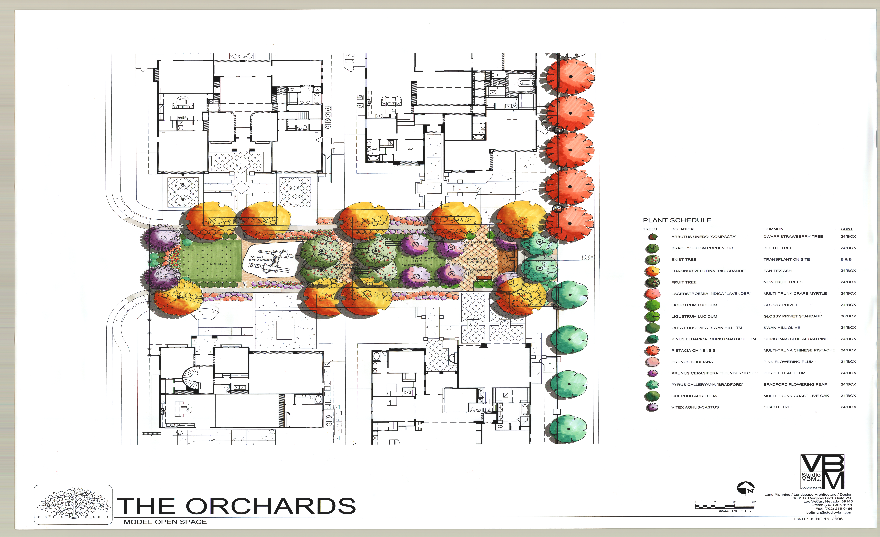
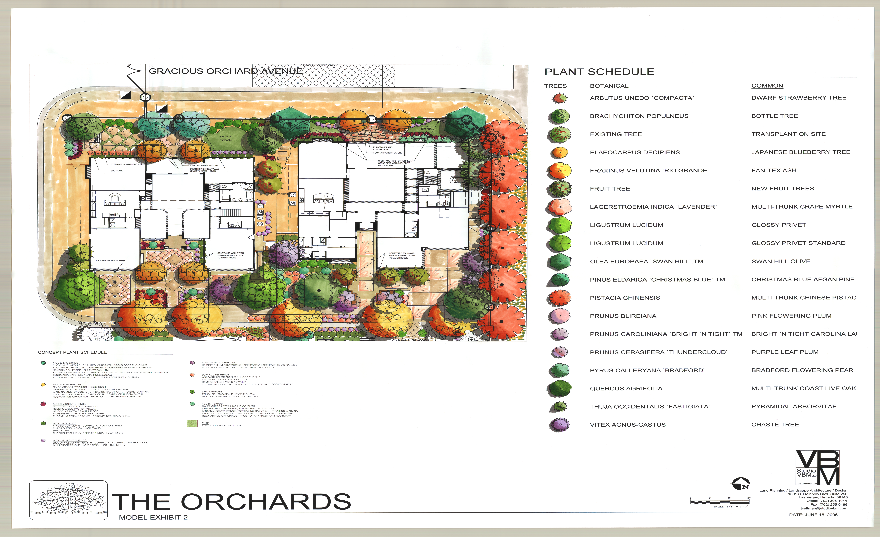
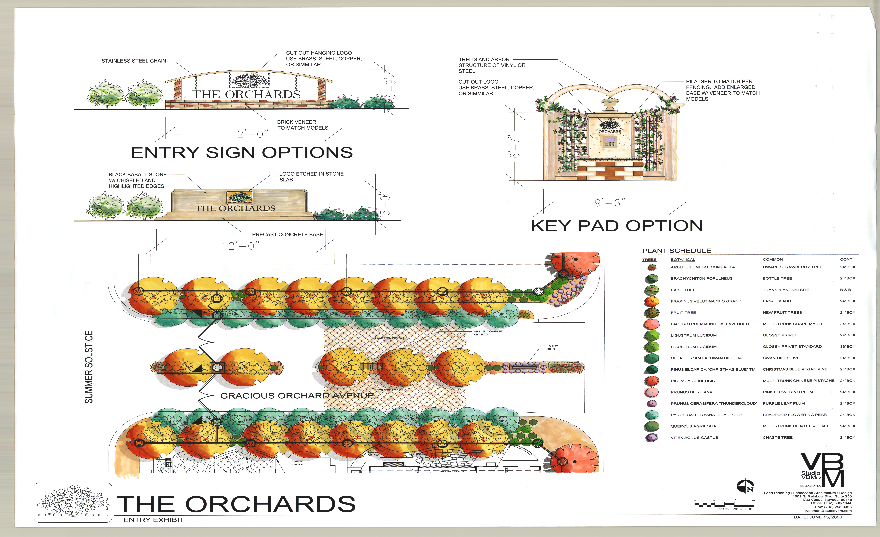
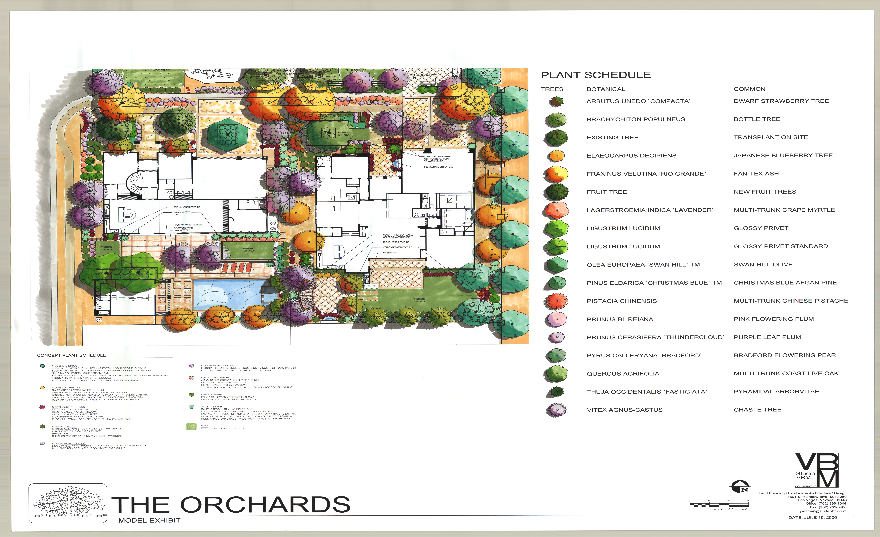
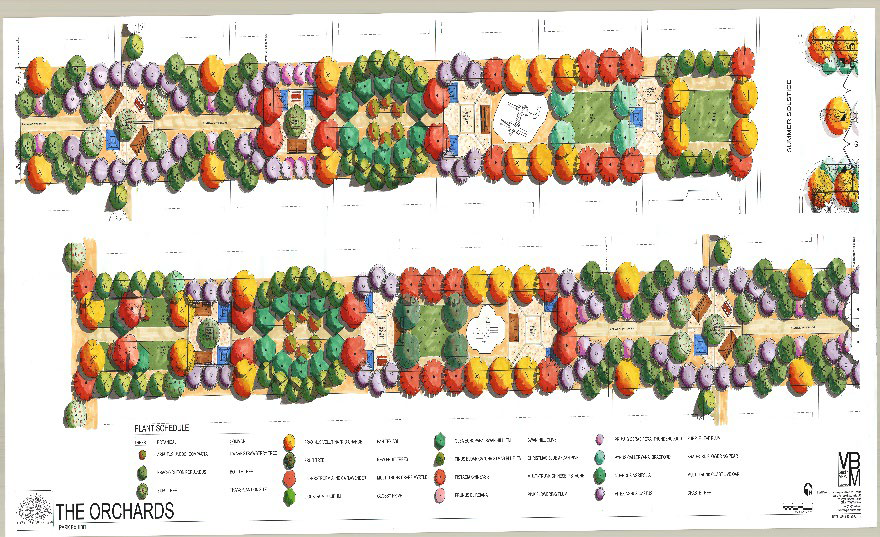
The Orchards was a small-scale planning project on an approximately 8.09-hectare site in Las Vegas. The scope of work included complete program generation and management, with responsibilities ranging from site identity and branding concepts to the design of signage, gates, pilasters, key boxes, and other site amenities. The project required coordination between land planning, landscape architecture, and branding to establish a cohesive identity at the subdivision scale.
In addition to physical design elements, the client was open to exploring opportunities that would connect the new development to the site’s history and surrounding community. The site was formerly an active orchard, presenting both a challenge and an opportunity to retain its character while accommodating new development.
Engaging Early on Historical Context
When working on sites with existing character or historical significance, our first step is to engage the owner in a clear conversation about whether—and how—that history should be acknowledged or highlighted. This establishes shared intent early and ensures that preservation efforts are purposeful rather than symbolic.
Integrating History into the Program
At The Orchards, the project name was not treated as a reference in name only. Approximately 300 existing fruit trees were evaluated, and the best specimens were preserved and incorporated into the design. These trees were distributed throughout the development—within the central park and as front-yard plantings—allowing the history of the site to remain present in daily residential life.
Using Preservation to Support Community Acceptance
Preserving and repurposing existing site assets helped address community concerns associated with redeveloping the orchard. A portion of the retained trees was used to create a buffer along the adjacent high school, providing a space that could be used for educational purposes and horticultural learning. This approach demonstrated tangible community benefit while reducing opposition to development.
Ensuring Changes Feel Intentional and Integrated
Community meetings, the retention of historical names and references, and a measured pace of change helped ensure the project felt considered rather than rushed. Preservation elements were woven into the overall planning framework so that the development evolved naturally, rather than appearing to overwrite the site’s past.
Small-scale planning succeeds when identity, history, and program are addressed together—not as separate exercises. This project illustrates how landscape architecture can guide that process, helping sites transition responsibly while maintaining a meaningful connection to place.